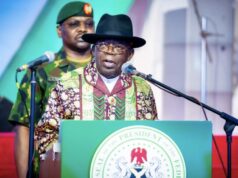
The Nigeria Conservation Foundation (NCF) has appealed to President Bola Tinubu to sign the endangered species conservation and protection bill 2025 into law.
In a statement issued on Friday to mark this year’s World Biodiversity Day, celebrated annually on May 22, the NCF said the legislation, already passed by the national assembly, is urgently needed to strengthen Nigeria’s legal framework for wildlife protection, curb illegal trade in endangered species, and improve enforcement against environmental crimes.
The foundation noted the growing pressure on Nigeria’s biodiversity, warning that the country’s forests, wetlands and coastal ecosystems are deteriorating rapidly due to deforestation, habitat loss, pollution, overexploitation and climate change.
Nigeria, one of Africa’s most biodiverse countries, hosts thousands of plant and animal species across savannas, rainforests, freshwater swamps and marine ecosystems.
However, conservation experts say more than 90 percent of its original forest cover has already been lost, placing several species at risk.
Joseph Onoja, NCF director-general, said biodiversity loss is no longer a distant environmental concern but a present and escalating crisis affecting livelihoods and national development.
“Biodiversity loss is not an abstract global problem. It is happening in our forests, wetlands, and communities, and it affects food security, water, health, and livelihoods,” the statement reads.
“The Kunming–Montreal Framework gives us the roadmap, and the NBSAP gives us the plan. What we need now is execution at the local level.”
Nigeria’s revised national biodiversity strategy and action plan (NBSAP), aligned with the global Kunming–Montreal biodiversity framework, commits the country to halting biodiversity loss by 2030 and protecting at least 30 percent of its land, inland waters, and coastal and marine areas.
The plan also targets key drivers of biodiversity decline, including unsustainable harvesting, pollution and invasive species, while promoting ecosystem restoration, sustainable resource use, and integration of biodiversity values into national development planning.
NCF warned that despite increasing research and awareness, biodiversity efforts in Nigeria remain underfunded and poorly integrated into economic planning, making it difficult to achieve set targets.
The foundation said it would continue working with communities, government agencies and the private sector over the next five years to protect high-risk ecosystems, strengthen enforcement against illegal wildlife trade, restore degraded landscapes and improve biodiversity monitoring systems.
It also urged Nigerians to support conservation efforts by rejecting illegal wildlife consumption and the glorification of animal cruelty on social media, and by adopting more sustainable consumption practices.