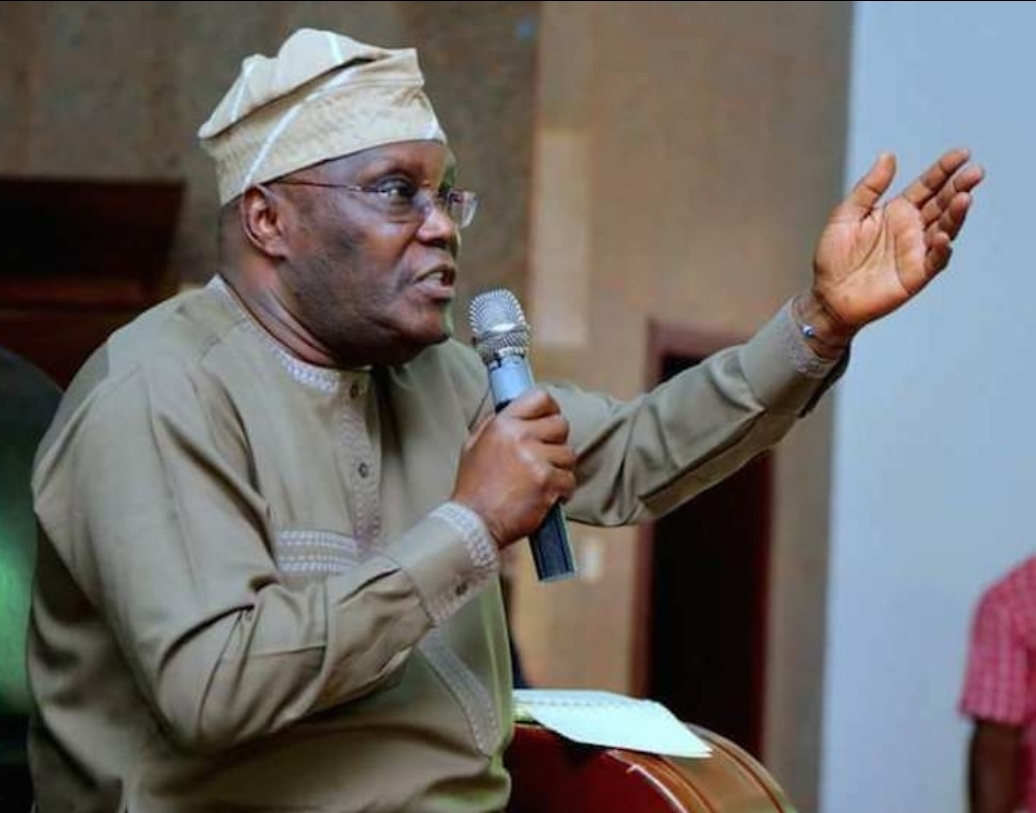
Presidential candidate of the African Democratic Congress (ADC), Atiku Abubakar, has said President Bola Tinubu’s incompetence and cluelessness have reopened the scars of Chibok girls abduction and also made the efforts of the nation’s military seem futile.
Atiku, who condemned the death of retired Major General Abubakar Rabe in the captivity of bandits, further described the incident as a damning indictment of the federal government’s failure to secure the lives of Nigerians.
The former Vice President, in a statement issued by his media office, Sunday, said the death of the former Director of Defence Information, has once again exposed the ineffectiveness of the Tinubu administration in tackling insecurity and highlighted the frightening reality that no Nigerian, regardless of status or service to the nation, was safe.
“It is with profound sadness and deep anger that we mourn the death of retired Major General Abubakar Rabe, a distinguished former Army Spokesperson and Director of Defence Information, who tragically passed away while in the captivity of bandits.
“General Rabe devoted the better part of his life to defending Nigeria. He served this country with honour, courage, and distinction. That such a man could end up dying in the hands of criminals is both heartbreaking and unacceptable,” Atiku said.
Reports indicate that the retired General succumbed to complications arising from diabetes and hypertension during his ordeal after efforts to secure his release proved unsuccessful.
According to Atiku, the tragedy was not merely the death of one retired military officer, but a stark reflection of a nation where criminal elements have become emboldened while citizens were increasingly left to fend for themselves.
His words: “His death marks yet another painful blow to our nation’s security architecture and a chilling reminder of the vulnerability of even our most experienced military leaders in the face of rampant banditry and terrorism.
“General Rabe’s ordeal is not an isolated case. In recent times, other senior military officers and distinguished Nigerians have either been killed or subjected to similar traumatic experiences at the hands of criminal gangs.
“The message being sent is dangerous: that those who once defended the nation can no longer rely on the nation for protection.”
Atiku noted that the tragedy of General Rabe’s death was made even more disturbing by another horrifying development that occurred on the very same day.
“As Nigerians mourned the passing of a retired Major General in the captivity of bandits, terrorists were simultaneously attacking the Kautikari community in Chibok Local Government Area of Borno State and setting primary and secondary school facilities ablaze.
“Chibok is not just a location; it is a national scar. Since the abduction of more than 270 schoolgirls in April 2014, the name has become a symbol of pain, loss, and collective trauma.
“Twelve years later, many families have still not fully recovered from the emotional devastation of that tragedy. Yet, on the very day a retired Major General died in the captivity of bandits, terrorists returned to the Chibok axis to burn schools.
“It was as though Nigeria was being dragged back into one of the darkest chapters of its history. The flames that consumed those school buildings on Sunday also reignited painful memories that Nigerians have spent more than a decade trying to overcome.
“The tragedy is not merely that schools were burnt; it is that a wound that never truly healed has been torn open once again.
“The symbolism is devastating. A retired General who spent his life fighting for the security of Nigeria dies in the hands of criminals, while terrorists return to one of their most notorious trademarks — attacking schools and terrorising communities in Borno State.
“What this tells Nigerians is simple and painful: despite the sacrifices of our soldiers, despite the billions spent on security, despite the countless lives lost in the war against terror, the nation is steadily losing the gains that were won through blood and sacrifice.”
He lamented that approximately 90 schoolchildren and teachers abducted from Oyo and Borno States since May 15 remained in captivity, alongside scores of other Nigerians being held by bandits and terrorists across the country.
He said the burning of schools in Chibok while schoolchildren remained in captivity elsewhere should alarm every Nigerian and force the government to confront the reality that insecurity was worsening rather than improving.
“Every school burned by terrorists is an attack on Nigeria’s future. Every child abducted is a reminder of state failure. Every citizen killed or left in captivity is an indictment of a security architecture that is no longer working.
“The death of General Rabe and the burning of schools in Chibok on the same day are not isolated incidents. Together, they tell the story of a nation under siege and a government that is steadily allowing hard-won security gains to slip away.
“This is precisely why I called for the declaration of a state of emergency on security. We cannot continue to pretend that all is well while bandits and terrorists roam freely, abduct citizens, burn schools, occupy communities, and even bring down our senior military officers.
“The federal government must rise to the occasion without further delay. Empty promises, propaganda, and routine condemnations are no longer enough.
“Nigerians deserve decisive, coordinated, and result-oriented action that will rescue those in captivity, dismantle criminal networks, and restore confidence in the capacity of the state to protect lives and property.”
Atiku extended his condolences to the family of the late Major General Abubakar Rabe, prayed for the safe release of his wife and all Nigerians currently held captive, and urged the nation not to become numb to the daily tragedies unfolding across the country.
“May the soul of General Rabe rest in peace. But let his death serve as a wake-up call. A nation that cannot protect its heroes, its children, and its citizens is a nation facing a grave crisis. The time for decisive action is now.”
CAN Marks Black Sunday Across Nigeria
President of the Christian Association of Nigeria (CAN), Archbishop Daniel Okoh, has sent a message to Christians and Nigerians as CAN observed, Sunday, June 14, 2026, as Black Sunday across the country in honour of the countless victims of insecurity.
CAN noted that the lives of men, women, children, clergy, farmers, students, and entire communities have been shattered by violence, kidnapping, terrorism, banditry, and bloodshed.
Addressing the nation, Okoh noted that Nigerians were not only mourning but speaking with one voice, saying, “Our nation is bleeding, and the Church cannot remain silent while innocent lives are lost and families live in fear.
“As we mark this solemn Black Sunday, we are mindful that our period of mourning coincided with the celebration of Democracy Day on June 12. Democracy is founded on the sanctity and dignity of human life, the rule of law, justice, and the protection of citizens.
“Therefore, there can be no more fitting way to honour the sacrifices that birthed our democracy than by recommitting ourselves to building a nation where every Nigerian can live, work, worship, and travel in safety. The quest for security is not separate from the democratic journey; it is central to its success and sustainability.
“As Christians, we believe that every human life is sacred because each person is created in the image of God. The Scriptures remind us in Matthew 5:4: ‘Blessed are those who mourn, for they shall be comforted’.
“Today, we stand in solidarity with the bereaved, the displaced, the wounded, and the traumatized. We pray for God’s comfort, healing, protection, and justice for all affected by these tragic events.
“We call on government on all levels to take urgent, decisive, and sustained measures to secure lives and property across our nation. The protection of citizens is a sacred responsibility entrusted to those in authority and must be treated with the utmost seriousness.
“While we wait for the Senate to complete it’s process, the Christian Association of Nigeria commends the House of Representatives for the passage of the bill on Community and State Policing on Thursday, June 11, 2026.
“This legislative initiative represents an important step toward strengthening grassroots security architecture and enhancing the capacity of communities to contribute meaningfully to the protection of lives and property.
“At this critical time, we call upon churches, Christian schools, hospitals, mission institutions, and all faith-based organisations to take proactive measures to safeguard their congregants, students, teachers, health workers, facilities, and properties.
“Security awareness, preparedness for emergency situations, collaboration with local security networks, and vigilance at all times have become necessary responsibilities in the face of prevailing threats. While we trust in God’s protection, we must also exercise wisdom and prudence in protecting those under our care.
“Dear Brethren, let this day deepen our compassion, strengthen our unity, and renew our commitment to peace, justice, and national healing. Let us continue to pray fervently for our nation, support affected families and communities, and refuse to surrender to fear.
“May God comfort the bereaved, heal the wounded, protect our nation, and grant our President, Senator Bola Ahmed Tinubu, the Commander-in-Chief of the Armed Forces of the Federal Republic of Nigeria and all those in governance, the wisdom, courage, and determination to confront and overcome this menace.”
Kalu: Centralised Policing Can’t Effectively Address Nigeria’s Diverse Security Threats
Deputy Speaker of the House of Representatives, Hon. Benjamin Ndubuisi Kalu, has reiterated his call for a decentralised policing structure, arguing that Nigeria’s centralised security system waas incapable of effectively addressing the country’s increasingly diverse and complex security challenges.
Speaking at the Nigerian People’s Strategic Conference and Defence Exhibition 2026 in Abuja over the weekend, Kalu stressed that the nature of security threats varied across regions, making it imperative to empower local authorities and communities to respond more effectively.
He also identified effective local governance as a critical component of the fight against insecurity, noting that many governance and development challenges originated at the grassroots level.
According to him, strengthening local government institutions would improve service delivery, promote accountability and help address conditions that fuel insecurity.
Kalu said: “I have consistently argued that a highly centralised policing system cannot adequately address the diverse and complex security realities of a country with over 220 million people, 36 states and 774 local government areas.
“State policing will reduce response times, improve intelligence gathering and enable security personnel to operate within communities they understand culturally, linguistically and socially.
“The bill now proceeds to the Senate and subsequently to the State Houses of Assembly for consideration. I urge all stakeholders to view this reform not as a political project but as a patriotic necessity.”
Highlighting recent legislative progress, the Deputy Speaker added: “The State Police Bill, which I proudly sponsored, successfully passed through the House after decades of debate and repeated attempts by previous assemblies.
“This represents a historic development in Nigeria’s constitutional and security evolution. For more than three decades, proposals for state policing repeatedly failed to gain traction. However, the realities of our current security challenges compelled us to rethink existing structures and embrace new approaches.
“The House of Representatives overwhelmingly approved the proposal, reflecting a broad national consensus that our security architecture must evolve.”
In his remarks, Senator Osita Izunaso, who represents Imo West Senatorial District, echoed similar concerns, and described Nigeria’s security challenges as complex and multifaceted.
He said: “The private sector controls much of the infrastructure that powers modern society, including telecommunications networks, financial systems, technology platforms and logistics infrastructure.
“When businesses invest in communities, create jobs, support education and contribute to local development, they are not merely pursuing profit; they are contributing to national security.”
The conference was themed: “Building a Modern Security Ecosystem: Integrating Private Sector Capacity Into Nigeria’s National Security Architecture.”
Muslim Clerics Support National Prayers
The Muslim Ummah of Nigeria has thrown its weight behind the Minister of State for Defence, Bello Matawalle, over his recent call for divine intervention through prayers to complement ongoing security operations across the country.
Secretary-General of the Forum, Prof. Abdullahi Umar Matawalle, made the position known in Gusau, Zamfara State, Sunday, saying Nigerians must seek the intervention of the Almighty Allah alongside military and other security measures to tackle banditry, terrorism, kidnapping and other violent crimes.
According to Matawalle, the complexity of Nigeria’s security challenges required a combination of physical and spiritual approaches, stressing that prayer remained a powerful tool capable of bringing lasting peace and stability to the nation.
He commended President Bola Tinubu for his commitment to tackling insecurity, noting that significant progress has been recorded in several parts of the North West and other regions since the administration assumed office.
“The president inherited enormous security challenges but has shown determination by strengthening military operations, improving intelligence gathering, and providing greater support to security agencies,” the Secretary-General of the Forum said.
Matawalle added that the achievements recorded in restoring relative peace in several communities, particularly in parts of the North West, were commendable when compared with the difficult situation inherited from previous administrations.
Terrorism: HURIWA Seeks Death Penalty
The Human Rights Writers Association of Nigeria (HURIWA), has called on the National Assembly to amend the country’s anti-terrorism laws to make terrorism and related violent crimes punishable by death.
This, however, followed the death of retired Major-General Abubakar Rabe, in the captivity of criminals.
The group said the death of the retired Army officer in the den of terrorists underscored the need for a more aggressive national response to terrorism, banditry and kidnapping.
In a statement by its National Coordinator, Comrade Emmanuel Nnadozie Onwubiko, HURIWA commended President Bola Tinubu for rejecting demands by the abductors for the release of detained terrorist suspects in exchange for their victim.
The rights group urged the federal government to move beyond public declarations and embark on what it described as an uncompromising offensive against criminal groups threatening national security.
HURIWA added that the death of General Rabe represented a direct challenge to the authority of the Nigerian State and demonstrates the growing audacity of terrorist and bandit groups operating across the country.
Tinubu Must Prioritise Security over Politics, Says Prophet Isa El‑Buba
Founder of Evangelical Biblical Outreach Ministries International (EBOMI), Prophet Isa El‑Buba, has urged President Bola Tinubu to make national security the government’s foremost priority, insisting that the protection of Nigerian lives must come before politics, elections or personal interests.
Speaking in Jos, Plateau State, during the Christian Association of Nigeria (CAN)’s Black Sunday observance, part of a three‑day national mourning and prayer programme over rising insecurity, the cleric said Nigeria had reached a critical point that demanded decisive leadership.
El‑Buba said the June 12 Democracy Day should remind leaders that democracy was not only about elections but about guaranteeing security, justice and equal opportunity for all citizens.
“Our nation today stands at a critical moment in history. Across many parts of this country, families live in fear of kidnappers, terrorists, bandits and other criminal elements,” he said.
Declaring security as Nigeria’s most urgent need, El‑Buba stressed that political interests must take the back seat.
“What Nigeria needs most now is security. Before politics, before elections and before personal interests. We must secure the lives of Nigerians. No security, no election,” he said, calling on government and security agencies to intensify operations against criminal networks and restore public confidence.