By Abubakar Yunusa
Nigeria’s capital market regulators are reportedly reviewing free float requirements for listed companies as part of efforts to boost liquidity, deepen the equity market, and attract more investors.
Free-float requirements for listed companies are regulations mandating that a minimum percentage or value of a company’s shares be available for public trading, excluding shares held by insiders, founders, or governments.
These rules ensure market liquidity and reduce price volatility, requiring companies to typically maintain a 20 percent free float or a specific minimum monetary value of shares.
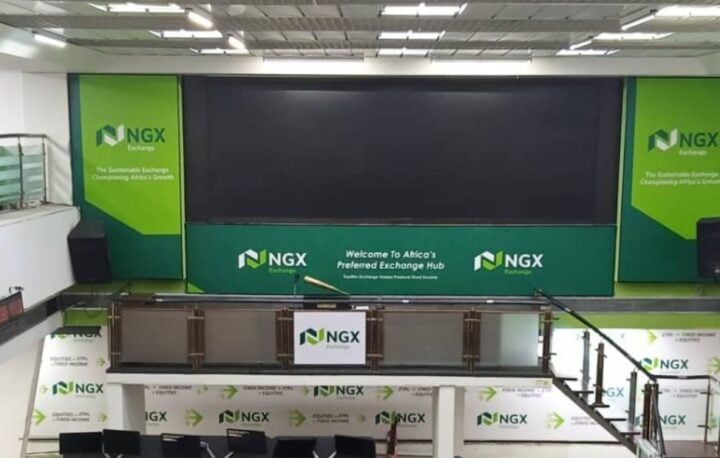
The review, according to a report by Bloomberg, is being undertaken by the Nigerian Exchange Group (NGX) in collaboration with the Securities and Exchange Commission (SEC).
The move comes amid concerns that many of the country’s largest listed firms are tightly held by controlling shareholders, a situation that limits the volume of tradable shares and increases the risk of price volatility.
Under the current rules, companies are required to maintain a minimum public shareholding of 20 percent or at least N40 billion worth of shares available for trading.
Speaking on the development in an interview, Temi Popoola, chief executive officer of the NGX Group, said Nigeria will introduce rules to ensure more companies meet the requirement.
Popoola said the review will assess how to optimise existing free-float levels, improve the accuracy of market data, and determine whether current thresholds remain fit for purpose.
“This includes assessing how we optimise existing free-float levels, ensuring the accuracy of free-float data captured by the exchange and evaluating whether current free-float requirements remain appropriate as the market evolves,” he said.
The CEO said regulators are also considering incorporating free-float factors into index construction, rather than relying solely on market capitalisation, in line with global practices used by index providers such as MSCI Inc. and FTSE Russell.
The MSCI and FTSE Russell are two dominant global providers of financial benchmarks, indices, and analytics for investors.
“We are considering whether elements of free float should play a greater role in how some of our indexes are structured, given that many indexes are currently based primarily on market capitalisation,” he said.
“All of these efforts form part of our broader objective of deepening the market and ensuring that its structure continues to support growing investor participation.”
On March 16, the NGX all-share index (ASI) crossed the 200,000-point mark for the first time, extending the rally in the domestic stock market.
The NGX all-share index rose 1.55 percent to close at 201,474.89 points, up from 198,407.30 points recorded during trading on March 13.
Also, the market capitalisation increased to N129.33 trillion, compared with N127.36 trillion recorded in the previous session.
Supreme Court upholds AMCON’s N22bn Lagos hotel sale
By Abubakar Yunusa
There is no longer business as usual for major loan defaulters in Nigeria after the Supreme Court upheld the sale of the Lagos Continental Hotel by the Asset Management Corporation of Nigeria (AMCON) to a private consortium for N22 billion.
In a judgment delivered on February 20, a five-member panel led by Kudirat Kekere‑Ekun dismissed appeals filed by the hotel’s former owners, Milan Industries Limited, affirming that due process was followed and that the public interest in recovering bad debts was paramount.
AMCON, in a statement issued over the weekend, traced the dispute to a credit facility granted by the defunct Skye Bank — now Polaris Bank — for the development of the high-rise hotel in Lagos.
According to the agency, the loan later became non-performing, prompting it to acquire the eligible bank asset in September 2018 after Milan Industries defaulted on its repayment obligations.
Prior to the acquisition, the bank had appointed Kunle Ogunba as receiver-manager to recover the outstanding debt. Ogunba subsequently assumed control of the property under the terms of the registered legal mortgage.
Following AMCON’s takeover, the receiver-manager’s appointment was retained, paving the way for the eventual disposal of the hotel to 11 Hospitality Plc in line with the security arrangement.
Milan Industries challenged the transaction at the Federal High Court but lost. Although the Court of Appeal later ruled in its favour, the verdict was overturned by the Supreme Court of Nigeria, which delivered final judgment backing AMCON’s action.
The apex court held that the AMCON Act is a special legislation designed to tackle systemic financial risks and must be interpreted in line with its unique purpose. It also affirmed provisions exempting the corporation from stamp duties and upheld its continuing security interest in mortgaged assets where debts remain unpaid.
The ruling effectively validated the N22bn sale and reinforced AMCON’s authority to dispose of secured assets in debt recovery efforts.
Meanwhile, the development comes days after the Central Bank of Nigeria directed commercial lenders to restrict large-ticket loan defaulters from accessing fresh credit facilities, signalling tighter enforcement in the banking sector.
Financial analysts say the twin moves mark a tough new era for chronic debtors in West Africa’s largest economy.