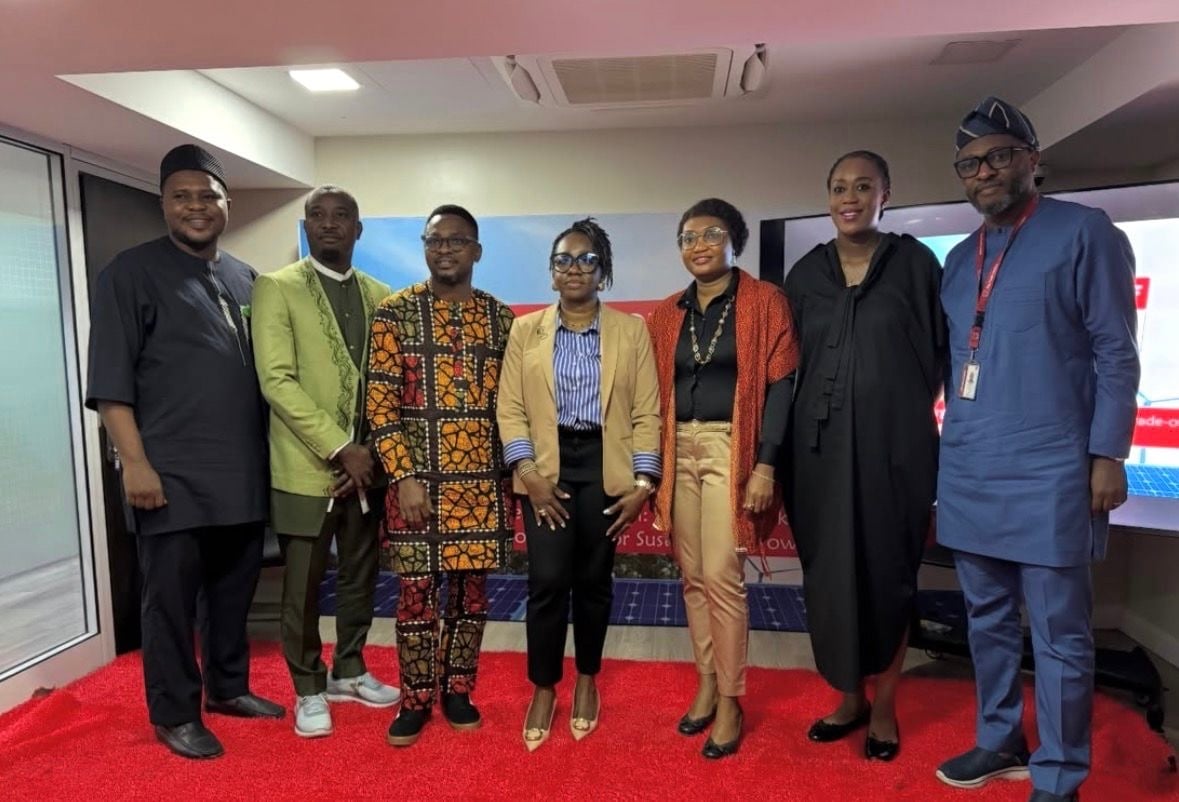
Titilayo Oshodi, special adviser to Babajide Sanwo-Olu, governor of Lagos, on climate change and circular economy, says Nigeria’s clean energy transition must be gradual, inclusive and backed by innovative financing.
Oshodi spoke at a stakeholders’ session organised by Rite Foods Limited, a beverage company, to mark the 2026 International Day of Clean Energy, observed annually on January 26.
The event, held in Lagos, was themed ‘Nigeria’s Clean Energy Transition: Balancing Risks, Trade-offs & Opportunities for Sustainable Growth’.
She said while the shift to cleaner energy is inevitable, Nigeria faces steep trade-offs driven by high upfront costs, financing gaps and affordability challenges for low-income households.
Oshodi warned that an aggressive transition without safeguards could place undue pressure on households and governments, arguing for a phased approach that integrates renewable energy, waste management and circular economy principles.
“If we transition too fast, it will be heavy on us and we will not be able to afford it. That is why we need to transition gradually, while infusing circular economy and renewable efficiency into the process,” she said.
Oshodi identified clean cooking as a critical and practical entry point for the country’s energy transition, especially for women and low-income households.
In 2025, Lagos government launched the 80 million clean cookstoves project to attract climate finance and de-risk low-carbon investments.
According to her, the project reduces fuel consumption and greenhouse gas emissions, improves public health outcomes, creates jobs and cuts deforestation.
She added that the initiative embeds circular economy principles by converting agricultural waste such as corn husks and rice husks, as well as construction waste, into briquettes used as fuel for the stoves.
Oshodi said behavioural change remains a major hurdle in climate action, noting that sustainability messaging in Nigeria must be tied to economic incentives rather than altruism.
She noted that beneficiaries of the clean cookstoves initiative receive a N10,000 monthly incentive for using the stoves, with usage data supporting carbon finance verification and performance tracking.
“In Lagos, agriculture and construction generate enormous waste. Our response is to create systems that ensure nothing goes to waste,” she said.
“For people living at or below the poverty line, sustainability must come with incentives. Talking about climate change and adopting climate resilience solutions has to be tagged with some benefits.”
In her opening remarks, Barong Asiodu, general manager of corporate planning and strategy at Rite Foods, said clean energy and sustainability are now central to Nigeria’s industrial future and competitiveness.
Asiodu said the company has embedded sustainability into its corporate strategy, particularly in energy use across its manufacturing operations.
She said the company’s facilities currently operate on 95 percent natural gas and solar energy, with only five percent reliance on automotive gas oil.
“In the last five years, we avoided an estimated 106,506 tons of CO2 equivalent emissions. When put in context, this is equivalent to planting approximately 3.2 million trees and allowing them to grow for 10 years,” she said.
Asiodu said while Nigeria faces challenges around energy reliability and affordability, the clean energy transition is an opportunity to attract investment, improve efficiency and build a resilient industrial base.
She added that progress would depend on collaboration between government, businesses, policymakers and communities.
Also speaking, Femi Ajileye, general manager of operations at Rite Foods, said sustainability is embedded into the company’s production systems.
“Our manufacturing processes are engineered to optimise energy efficiency while maintaining the highest quality standards,” Ajileye said.
“By leveraging cleaner energy sources and fully automated production lines, we minimise energy losses, ensure consistent output, and uphold our environmental responsibilities.”