International Committee of the Red Cross (ICRC)
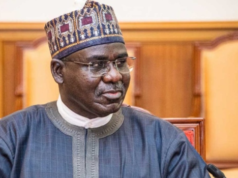
Musa Aliyu, chairman of the Independent Corrupt Practices and Other Related Offences Commission (ICPC), has urged procurement officers to adopt “radical transparency” to curb the loss of billions of naira annually to corruption.
The ICPC chairman, Musa Aliyu, made the call on Tuesday in Abuja at a one-day procurement engagement workshop organised by the commission for directors and heads of procurement in government ministries, departments, and agencies (MDAs).
The ICPC boss urged the officials to embrace transparency in the management of public contracts.
He warned that without decisive action, public procurement, which accounts for 10‑25 per cent of the nation’s GDP, will remain the “single largest conduit for corruption.”
Mr Aliyu highlighted a litany of schemes that have plagued the system, from contract splitting and over-invoicing that inflate costs by 200‑300 per cent to phantom contracts and abandoned projects that vanish with mobilisation funds.
“These practices not only drain the treasury but also deny millions of Nigerians clean water, health care, roads, and electricity,” he said.
The chairman recalled the 2019 launch of the Constituency and Executive Projects Tracking Initiative (CEPTI), which physically monitored projects across all 36 states and the Federal Capital Territory.
CEPTI exposed structural flaws, including projects sited on private property, personal companies executing government work, and duplicated contracts—but also delivered tangible results: functional schools, operational boreholes, completed health centres and solar streetlights now serving rural communities.
“Transparency, when properly implemented, directly improves citizens’ lives,” Mr Aliyu asserted, noting that the commission, together with the Federal Ministry of Works, is now tracking road projects worth a staggering N36 trillion.
He stressed that the Public Procurement Act of 2007, which created the Bureau of Public Procurement (BPP) as the regulatory authority, must be fully enforced, especially at sub‑national levels where compliance remains inconsistent.
To strengthen the system, the chairman outlined a series of measures: publishing annual procurement plans before work begins, disclosing bidder lists and evaluation criteria, providing regular progress reports with photographic evidence, and issuing completion certificates.
He also advocated for open competitive bidding as the default method, multi‑stakeholder evaluation committees, and independent verification of contractor capacity.
While championing e‑procurement as a “transformative” tool that can create immutable audit trails and real‑time monitoring, Mr Aliyu cautioned that technology alone was insufficient.
“Without political will, adequate funding, capacity building and robust change management, e‑procurement platforms become expensive failures,” he warned.
Legislators were called upon to exercise stronger oversight, close loopholes in the Procurement Act, and back the establishment of a Special Crimes Court for expedited corruption prosecution.
Frontline procurement officers were urged to treat transparency as a professional ethic, implement stringent internal controls, resist political pressure, and report suspected fraud via the ICPC’s confidential 24/7 hotline (0800‑CALL‑ICPC).
Mr Aliyu reaffirmed the ICPC’s unwavering commitment to the anti‑corruption fight, declaring that Nigeria stands at a crossroads: “Either we continue down the path of opacity and personal enrichment, or we embrace transparency and accountability as a sacred trust for our citizens.”
He concluded with a rallying cry: “Corruption thrives in darkness; let us flood the system with light.”
Also speaking, the director-general of the Bureau of Public Procurement (BPP), Adebowale Adedokun, praised the ICPC for improving compliance with procurement rules.
He highlighted the recent approval of the National Infrastructure Development Policy, which provides a stronger legal framework for prosecuting contractors delivering substandard projects.
“For the first time, Nigeria now has a clear national document that compels quality and holds contractors accountable. This will strengthen our partnership with ICPC in enforcing compliance,” he said, emphasising the importance of procurement audits and closer collaboration to identify and address infractions.
The director-general of the Nigerian Building and Road Research Institute (NBRRI), Samson Duna, noted that many building collapses in Nigeria result from the use of substandard materials, particularly steel that fails laboratory tests.
He commended ICPC’s involvement in improving documentation, site supervision, and contractor compliance, and recommended extending the rotation period of ICPC desk officers beyond six months to enable more effective oversight.
The workshop concluded with interactive discussions, networking among stakeholders, and marking a renewed commitment to transparency, accountability, and improved public service delivery.
Aminu Yakubu, director of procurement at NASRDA, said the workshop was a wake-up call for officials, reminding them of the consequences of failing to carry out their duties in accordance with the laid-down rules.
(NAN)