By Abubakar Yunusa
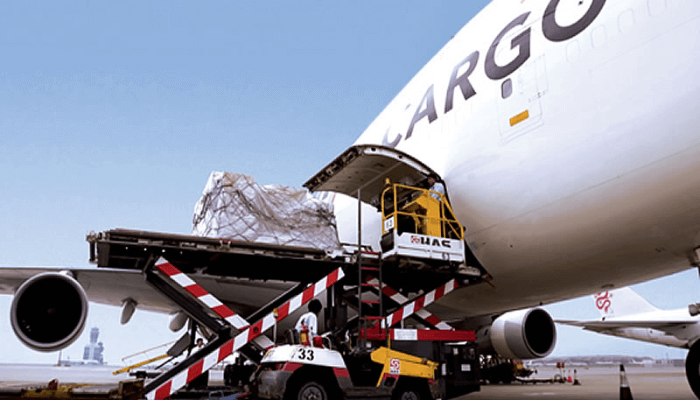
African airlines led global cargo demand growth in November 2025, recording a 15.6 percent year-on-year increase, according to the International Air Transport Association (IATA).
The air transport group said the result represents the highest performance recorded among all regions.
The IATA, in its November 2025 data, said capacity for African carriers also expanded by 18.1 percent compared to the same period in 2024.
Globally, the group said total air cargo demand — measured in cargo tonne-kilometres (CTK) — rose by 5.5 percent year-on-year in November, while international cargo demand grew by 6.9 percent.
The association said capacity, measured in available cargo tonne-kilometres (ACTK), increased by 4.7 percent, with international capacity up 6.5 percent.
By region, Asia-Pacific airlines recorded a 10.3 percent increase in air cargo demand, with capacity rising 8.4 percent, while European carriers posted a 5.8 percent increase in demand and a 4.1 percent rise in capacity.
The data showed that Middle Eastern airlines saw demand grow by 7.4 percent, while capacity expanded by 11 percent.
In contrast, North American carriers recorded a 1.6 percent decline in air cargo demand, with capacity down 2.3 percent.
“Latin American and Caribbean carriers saw a 4.8% year-on-year decrease in demand for air cargo in November, the weakest performance of all regions. Capacity decreased by 3.0% year-on-year,” the IATA said.
“African airlines saw a 15.6% year-on-year increase in demand for air cargo in November, the strongest rise of all regions. Capacity increased by 18.1% year-on-year.”
Willie Walsh, IATA’s director-general, said air cargo growth was driven by increased shipments ahead of the year-end holiday season and strong emerging market demand.
“Strong emerging market demand and selective Middle Eastern growth more than made-up for softness in the Americas amid ongoing adjustment to the new US tariff regime,” Walsh said.
“Globally, the fourth quarter for air cargo was resilient as strategic re-routing of trade shaped performance across key markets. The strong end for 2025 bodes well for the air cargo industry as it enters the new year.”
IATA noted that the operating environment in November was shaped by a 2 percent year-on-year increase in global goods trade in October 2025, rising jet fuel prices, and improving manufacturing sentiment.
“Global manufacturing sentiment strengthened in November, with the PMI rising for the fourth consecutive month to reach 51.17,” the association said.
“New export orders improved slightly to 49.87, but remained below the 50-point expansion threshold, reflecting ongoing caution amid tariff uncertainty.”
Also, IATA said global passenger demand remained strong in November 2025.
According to the association, total passenger traffic, measured in revenue passenger kilometres (RPK), rose by 5.7 percent year-on-year, while capacity increased by 5.4 percent.
The transport association said the global load factor climbed to 83.7 percent, a record high for November.
“International demand rose 7.7% compared to November 2024. Capacity was up 7.1% year-on-year, and the load factor was 84.0% (+0.4 ppt compared to November 2024),” the IATA said.
“Domestic demand increased 2.7% compared to November 2024. Capacity was up 2.7% year-on-year. The load factor was 83.2% (unchanged compared to November 2024).”
The association said growth slowed slightly compared to October in most regions, except Africa.
Asia-Pacific airlines recorded a 9.3 percent year-on-year increase in demand, with capacity rising 8.7 percent and the load factor improving to 85.8 percent.
The organisation noted that geopolitical tensions contributed to traffic between China and Japan, slowing to single-digit growth for the first time in 2025.
European carriers were said to have posted a 6.8 percent increase in demand, while capacity rose 6.1 percent, and load factor climbed to 85.6 percent.
The aviation body said North American airlines recorded a 4 percent increase in demand, with capacity upticking to 4.2 percent, even though the load factor dipped slightly to 81 percent.
IATA said the region has now recorded 10 consecutive months of year-on-year decline in load factor.
“Middle Eastern carriers saw a 9.6% year-on-year increase in demand. Capacity increased 9.2% year-on-year, and the load factor was 81.4% (+0.3 ppt compared to November 2024),” IATA added.
“Latin American airlines saw a 4.4% year-on-year increase in demand. Capacity climbed 4.7% year-on-year. The load factor was 83.9% (-0.2 ppt compared to November 2024).
“African airlines were the stand-out performer, with an 11.2% year-on-year increase in demand. Capacity was up 8.5% year-on-year. The load factor was 74.3% (+1.8 ppt compared to November 2024).”
Walsh, speaking on the results, said airlines continued to meet growing passenger demand despite capacity constraints linked to challenges in the global aerospace supply chain.
“The new year’s resolution for the manufacturing sector must be to increase production to meet the needs of their airline customers,” he said.
The director-general said the aircraft order backlog, which exceeded 17,000 in 2025, must be brought down in 2026.