On February 28, the United States and Israel launched missile strikes on Iran, despite ongoing talks between Washington and Tehran over the Islamic nation’s controversial nuclear programme.
The strikes were a culmination of two overlapping crisis tracks: the 2025 joint US-Israel nuclear‑site raids in Iran and decades long regional tensions.
Israel and Iranian proxies have been engaged in conflict since 1985, which escalated into a series of direct confrontations in 2024, and a 12-day war in June 2025 that also saw US strikes aimed at destroying Iran’s nuclear facilities.
Saturday’s strikes were the most intense escalation of tensions between Iran and the US-Israel tag team yet — which saw the death of Ayatollah Ali Khamenei, Iran’s supreme leader. He was 86.
Here is a timeline of events that led to the recent strikes in the Islamic Republic.
JUNE 2025: On June 13, 2025, Israel struck Iran, targeting its nuclear facilities. The intense 12-day conflict killed top nuclear scientists, military commanders, and over 600 civilians. Retaliatory Iranian strikes in Israel killed some 28 people and injured thousands. On June 21, 2025, the US bombed Iran’s key nuclear facilities in Fordow, Natanz, and Isfahan.
An early intelligence assessment from the Pentagon assessed that the US and Israeli strikes damaged Iran’s nuclear facilities, but “did not destroy the core components of the country’s nuclear program and likely only set it back by months,” Arms Control Association reported, citing officials familiar with the assessment.
But the White House denied the finding, saying Iran’s nuclear programme was completely destroyed. Iran countered the White House’s claims.
After 12 days of daily missile and drone exchanges, a US‑brokered ceasefire is announced.
DECEMBER 2025: Protests erupted on December 28, 2025, in Tehran, sparked by the national currency’s plunge to record lows (around 1.4 million rials per US dollar) and a sudden spike in prices for food and basic goods.
The rial had already lost more than 40 percent of its value since Israel’s 12-day conflict with Iran. Those losses were just the latest in a prolonged collapse that had erased nearly 90 percent of the rial’s value since the US quit the nuclear deal it had with Iran and reimposed sanctions on the Islamic Republic in 2018.
The nuclear deal, known as the joint comprehensive plan of action (JCPOA), was a 2015 agreement between Iran and several world powers to restrict Iran’s nuclear programme in exchange for relief of international sanctions on Iran.
Within days the unrest spread to dozens of cities, with citizens chanting anti‑government slogans and calling for the end of the Islamic Republic system.
The protests were met with a violent state clampdown. In the first few weeks of the demonstrations, over 2,000 people were killed, according to rights groups and security officials.
The death toll in the protests which crept into February have been highly contested. International media houses and rights groups pegged the cumulative death toll at about 30,000, but Iranian officials said the figures were exaggerated and that the number stood at around 3,000.
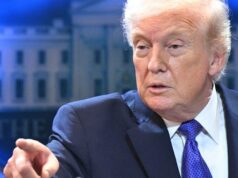
JANUARY: While the protests raged, US President Donald Trump on January 2, publicly encouraged Iranians to continue demonstrating.
He warned that the US would intervene if security forces “violently killed” demonstrators, stating the US was “locked and loaded and ready to go”.
The call was re-echoed on this rhetoric most prominently on January 13 when he urged “Iran Patriots” to take over state institutions, declaring that “help” was on its way and promising that the “killers and abusers” would “pay a big price”.
On January 26, US warships were reported to have arrived in the Middle East. Trump said the massive armada, a large fleet of warship, was moving quickly to Iran with “great power, enthusiasm, and purpose” unless Iran makes a nuclear deal.
Iran vowed a “strong response” should the US attack.
FEBRUARY: Nuclear talks between both countries resumed in February in hopes of diffusing tensions. The indirect discussions between both countries were mediated by Oman.
These sessions, spanning February 17-26, involved three main rounds, described as the “most intense” yet, with Abbas Araghchi, Iran’s foreign minister leading Tehran’s side, and Steve Witkoff, US special envoy; and Jared Kushner, Trump’s son-in-law; representing the US.
No final deal emerged, but both sides claimed “progress,” including agreement on “general guiding principles” for IAEA oversight of sites like Natanz and Fordow.
Barely 48 hours after the “progress” report, shots were fired.
FEBRUARY 28 – THE OPENING HOURS
Around 06:23 GMT (08:23 local in Israel) – On Saturday, Israel Katz, Israeli defence minister, announces a “pre-emptive” strike on Iran. Sirens sound across Israel simultaneously as the Israeli Defense Forces (IDF) warns civilians to stay close to bomb shelters.
Within 30 minutes – Iran and Israel both close their civilian airspace, and the Israeli military says it has destroyed key Iranian air‑defence and early‑warning radars to create a corridor for follow-on strikes.
Around 07:30 GMT – Trump confirms that the US has launched a large-scale military campaign in coordination with Israel. The stated goals: to destroy Iran’s missile-industrial complex, naval forces in the Persian Gulf, and remaining nuclear‑related infrastructure.
IRANIAN RETALIATION
Within hours of the first wave – Iran launches dozens of ballistic missiles and drones in a coordinated regional campaign against targeted US military bases in six states: Qatar, United Arab Emirates (UAE), Saudi Arabia, Bahrain, Jordan and Kuwait.
Debris damages major hotels in Dubai —Debris damage from intercepted Iranian missiles sparked a fire at the Dubai’ The Palm hotel (Palm Jumeirah), Burj Al Arab hotel, and its international airport. The international airports in Abu Dhabi and Kuwait were also reported to have been affected.
MARCH 1: Casualty figures begin to trickle in.
In Iran, preliminary figures from local and international monitors suggest over 200 dead and more than 700 injured. In Israel and the wider region, early counts indicate at least several dozen killed and hundreds injured.
Three American soldiers were also announced dead, and five seriously wounded in the ongoing conflict with Iran, the US Central Command said Sunday.
Trump has said he is ready to talk to Iran’s new leadership but noted that the campaign could last up to four weeks.
Iran
US-Israel strikes against Iran