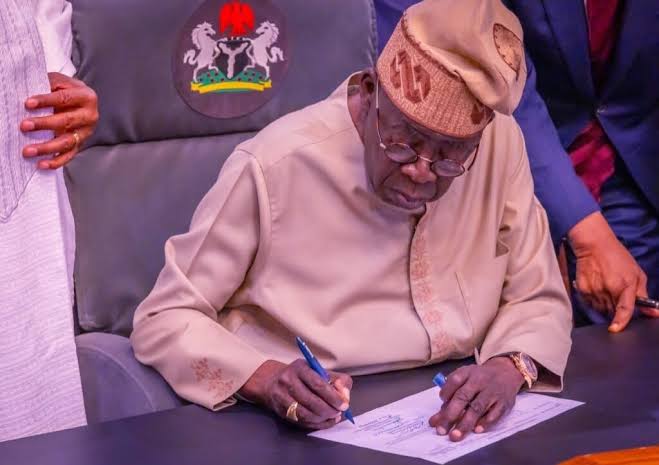
The federal government, through the Federal Ministry of Finance, has initiated measures to strengthen petroleum revenue management and protect federal income under Executive Order 9.
The move followed directives issued by President Bola Ahmed Tinubu, aimed at enhancing fiscal transparency and ensuring that revenue from petroleum operations is handled in a manner that supports the financial stability of all tiers of government.
According to the statement shared on the ministry’s X handle on Monday, signed and released by the minister of finance and coordinating minister of the economy Wale Edun, who chairs the implementation committee, the directive requires petroleum revenues to be handled “in a manner that upholds constitutional principles, protects revenues accruable to the federation, and supports the fiscal stability of all three tiers of government.”
He emphasised that the reforms are intended to strengthen Nigeria’s economic framework and ensure transparency in revenue administration.
In line with the president’s directive, the committee announced that NNPC Limited will immediately cease the collection of a 30 per cent management fee and a 30 per cent frontier exploration fund deduction previously applied to profit oil and profit gas under Production Sharing Contracts (PSCs).
It also suspended remittances of gas flare penalties into the Midstream and Downstream Gas Infrastructure Fund (MDGIF), stating that the changes align with the objectives of the executive order.
The committee further addressed provisions relating to direct contractor payments into the Federation Account, noting that the transition would be implemented gradually to preserve contractual obligations and investor confidence.
A defined transition period has been approved, during which contractors will continue to remit payments under existing processes until detailed operational guidelines are issued.
To facilitate the reform, a technical subcommittee has been established to develop guidelines for direct remittances within three weeks and review provisions of the Petroleum Industry Act (PIA) to address structural and fiscal gaps affecting revenue generation. The subcommittee will include representatives from energy and finance institutions, with secretarial support from the Budget Office of the Federation.