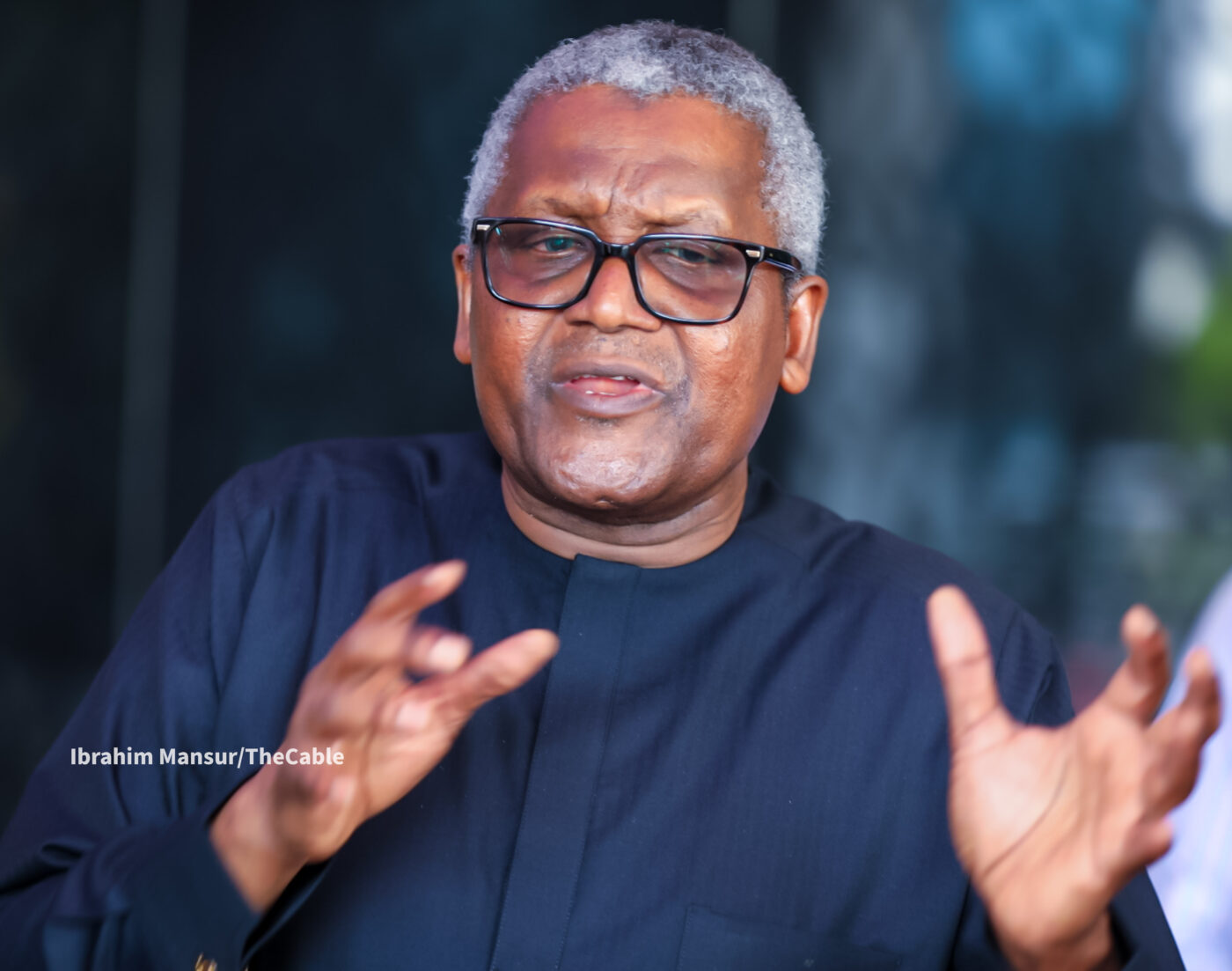
Aliko Dangote, president of the Dangote Group, says rising oil price has forced some countries to ask their citizens to work from home.
Dangote spoke to journalists after a courtesy visit to President Bola Tinubu on Monday after the Eid al-Fitr celebrations.
The businessman said if the Middle East conflict does not ease, energy prices will continue to rise, adding that governments are currently unable to increase salaries.
“So people will really feel the heat. People like barbers, people who are making bread, people who have industries, who have to fire their own generators,” he said.
“I mean, you can see, in some countries today what they’ve done is ask everybody to work from home because they cannot…
“I think in Indonesia or so, they said only go to work four days a week and they will look at the situation, if it doesn’t improve, they will ask everybody not to go to work anymore. We did that in the time of COVID-19, where people worked from home.”
Speaking further on the impact of the conflict, Dangote said it carries significant implications for Nigeria.
He noted that although the country is not directly involved, the interconnected nature of the global economy means it will inevitably feel the effects.
“But we pray this situation will be sorted out, it’s not going to escalate. If it doesn’t de-escalate, we’ll end up paying big prices,” Dangote said.
Furthermore, he said Africa is already heavily burdened by debt, and adding the effects of the conflict would worsen the strain on governments and citizens alike, despite having no direct involvement in the crisis.
“If you look at it now, when you talk about energy, energy affects almost everything and it’s not only energy, some people will try and take a chance and say this an opportunity so let me make money,” Dangote said.
“So I pray, and we all need to pray that this thing de-escalates. If it doesn’t escalate, normally we in Africa, we don’t have any reserves in terms of savings or in terms of…
“People normally go out and look for money for the next day or even for the same day. If they don’t work that day, they won’t eat. So I think really, we just need all hands on deck to pray that this thing comes to an end.”
On March 20, the International Energy Agency (IEA) said minimising road and air transport, working from home where possible, driving slower, and switching to electric cooking could significantly help cushion the shock of the Middle East conflict for consumers.