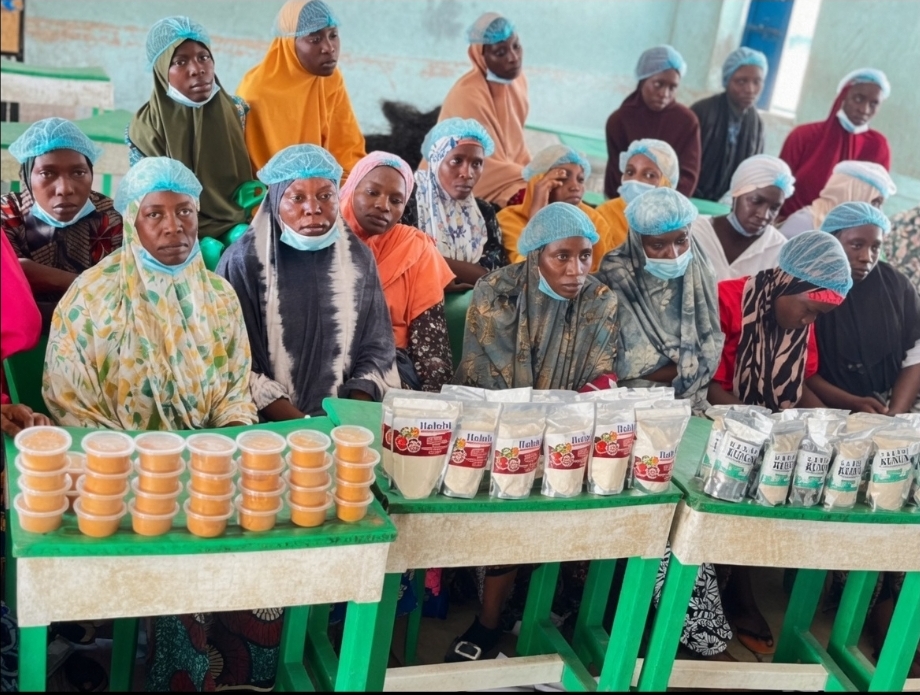
In Nasarawa State, 30 women are gradually changing the face of small-scale agribusiness through the StreFaS project — a major initiative implemented by TechnoServe with support from AGRA and Nestlé Nigeria.
The StreFaS project (Strengthening Farmers’ and SMEs’ Resilience through Climate-Smart Grain Production and Accessing the Structured Markets) is a three-year programme (2024–2027) designed to build climate resilience, promote regenerative agriculture, and link smallholder farmers and processors to formal markets across Kaduna and Nasarawa states.
While the overall project supports 25,000 smallholder farmers – with strong emphasis on women and youth – the value-addition component in Nasarawa focuses on empowering women processors to move up the agricultural value chain.
Before the intervention, many of these women operated as typical smallholder processors. They produced local staples using traditional methods, often recording high post-harvest losses, poor packaging, and limited bargaining power in the market. Incomes were low and businesses rarely scaled.
Under the TechnoServe-led training supported by AGRA and Nestlé, the women received intensive practical sessions in modern crop processing techniques, food safety and quality assurance, attractive packaging and branding, as well as business skills covering costing, pricing, record-keeping, and marketing.
The goal was clear: transform raw agricultural produce into competitive, value-added products that meet market standards.
The results are already visible on the ground. The participants are now producing and selling Tom Brown, Kunun Tsamiya, beans flour, and chilli powder — items processed to high standards, safely packaged, and positioned for better market acceptance. Several women have reported increased monthly incomes and sharp reductions in post-harvest losses.
Their activities are also contributing to better access to nutritious processed foods in local communities.
“Before this programme, we used to sell our raw grains and vegetables at whatever price buyers offered. Now we process them, add value, package properly, and sell at better margins. I can now support my household more comfortably,” said one Amina Talatu from Awe LGA.
To consolidate these gains and drive long-term growth, the next phase of the StreFaS project will organise the women into strong producer groups. This will enable them to consistently meet quality and volume requirements of larger buyers. The groups will be linked to reliable markets, including retailers, food vendors, schools, and small and medium enterprises (SMEs) within Awe Local Government Area and beyond.
Plans are also advancing to expand this women-focused value-addition model to Akwanga and other parts of the state. This aligns with StreFaS’s broader objective of creating inclusive, scalable agribusiness opportunities, particularly for women, within Nigeria’s grain value chains.
Through AGRA’s strategic support, Nestlé’s commitment to sustainable sourcing, and TechnoServe’s implementation expertise, the StreFaS project is demonstrating that targeted skills development and market linkages can transform women processors into confident entrepreneurs — strengthening household incomes, improving food security, and contributing to a more resilient agricultural sector in Nigeria.