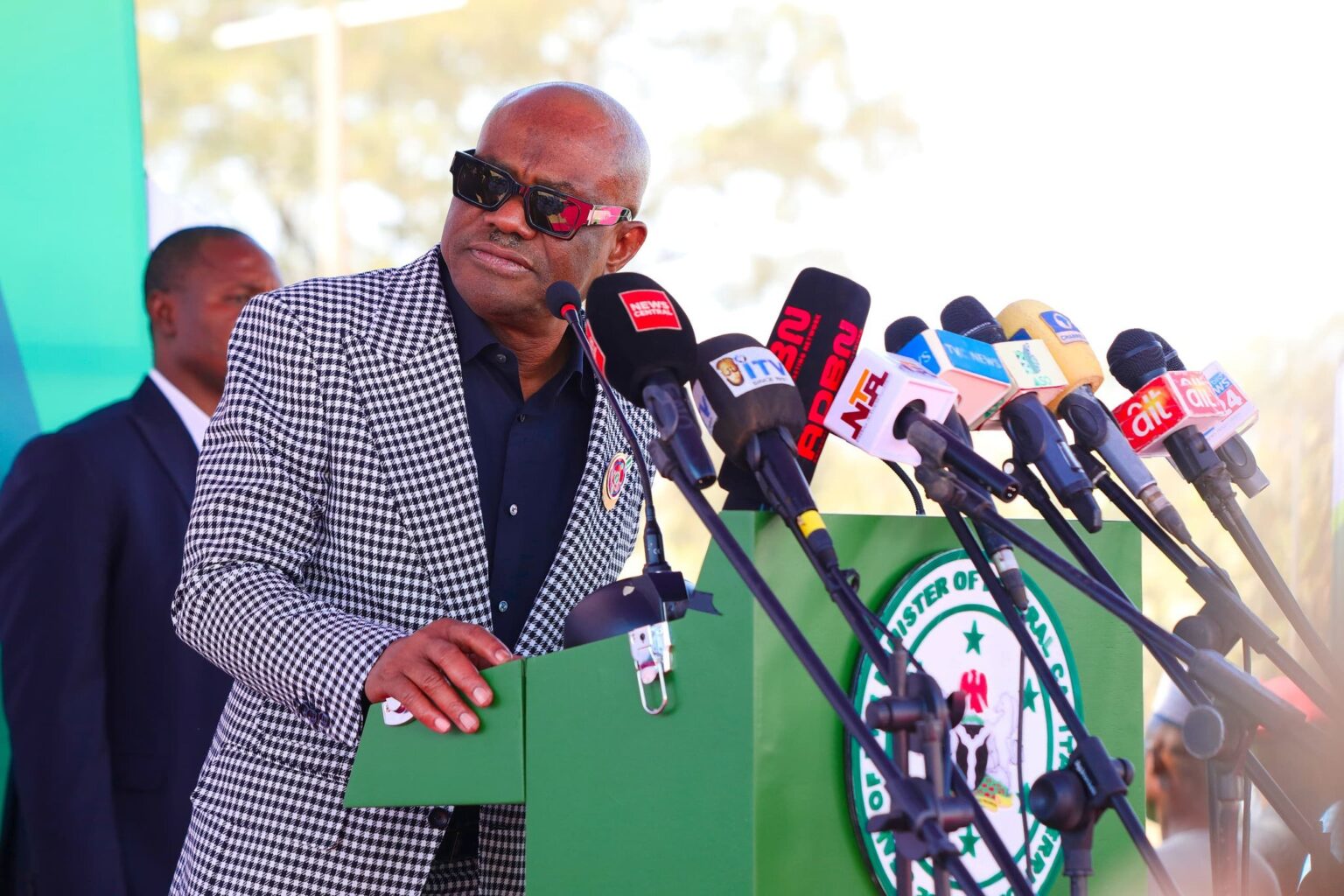
A network of press freedom and civil society organisations has condemned recent remarks by Nyesom Wike, minister of the Federal Capital Territory (FCT), directed at Channels Television presenter Seun Okinbaloye.
Wike, during a media chat in Abuja on Friday, threatened to shoot Okinbaloye over the journalist’s comments on the possibility of Nigeria becoming a one-party state.
Speaking on his programme, Okinbaloye had said it was disappointing that the 2027 elections were shaping up as a contest dominated by one political party, citing the crisis in the African Democratic Congress (ADC).
He said that Nigeria is “doomed democratically” if the only viable opposition — ADC — is unable to contest the 2027 elections.
Reacting to Okinbaloye, Wike had said: “I was surprised yesterday, thoroughly surprised. If there was any way to break the screen, I would have shot him.”
In a statement signed by 14 organisations, the network demanded that Wike retract his remarks, apologise to Okinbaloye and the media community, and “reaffirm a clear commitment to non-violence and the defence of press freedom as a public official on oath to abide with the constitution”.
They said that while the minister later clarified that he did not intend to physically harm the journalist, “even such hypothetical expressions of violent intent constitute a conditional threat and cannot be dismissed as harmless”.
“Even if meant humorously, such rhetoric can be perceived as intimidation by both the journalist and the audience,” the statement reads.
“We assert that conditional threats or violent statements against journalists contribute to a climate of fear, undermining the fundamental principles of a free and independent press, especially as journalists play a crucial role in informing the public and holding power to account.”
The CSOs and press freedom groups warned that threats or violent language, whether direct or indirect, put journalists at risk and weaken public trust in democracy.
“With a press freedom index ranking of 122 out of 180 countries, Nigeria remains one of West Africa’s most dangerous and challenging countries for journalists,” the statement said.
“Media professionals are routinely monitored, attacked, and arbitrarily arrested, particularly during electoral campaigns. Incidents like this can further imperil journalists and highlight the urgent need for balanced and responsible political engagement, especially from public officials.”
The network also urged institutions and public figures to reject violent rhetoric against the media and promote a culture of respectful engagement, even amid strong disagreements.