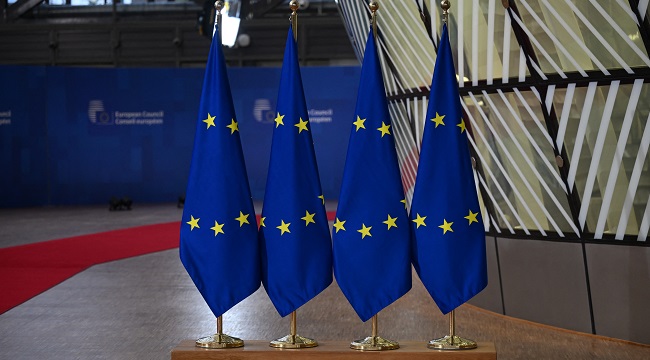
Energy ministers from the EU’s 27 nations gathered for talks in Brussels Monday, as the Iran war pushes up oil and gas prices.
The meeting will lay the groundwork for a Thursday summit, where EU leaders are set to discuss how to help families and businesses deal with soaring energy prices.
The bloc has a limited number of tools at its disposal. Here are some facts:
Countries Respond
Some member states retain a large degree of independence from Brussels in influencing retail energy prices, and have already moved to contain the fallout from conflict in the Middle East.
Croatia and Hungary have announced fuel price caps, and Greece is to cap profit margins on gasoline.
EU energy chief Dan Jorgensen this week urged EU governments to lower taxes and levies on energy where possible — but that requires some budget leeway.
In France, energy giant TotalEnergies announced a price cap on gasoline, following pressure from the country’s cash-strapped government that has stepped up price checks at gas stations.
Meanwhile, the 32 members of the International Energy Agency have agreed to unlock 400 million barrels of oil from reserves — their largest release ever — in a bid to ease prices.
Electricity Market Debate
In Europe, the price of electricity is determined by production costs of the last power plant called upon to meet demand.
That tends to be cheaper renewable or nuclear plants when demand is low and pricier gas power stations when it is high.
“As long as we are forced to rely on thermal power plants during peak hours, the marginal price will always be determined by fossil fuels,” said Marc Baudry, an economist at the Paris Dauphine University.
The crisis has revived calls from Italy and others for changes to the EU’s electricity market, which was last reformed to reduce exposure to gas price volatility in 2024.
European Commission President Ursula von der Leyen said this week Brussels was “exploring subsidising or capping the gas price” used to calculate electricity costs.
But a similar market correction mechanism introduced after Russia’s invasion of Ukraine in 2022 was never activated due to the strict conditions for doing so.
And critics say the main reason power in Europe is about three times more expensive than in the United States is the continent’s lack of fossil fuel resources — which forces it to rely on expensive imports.
Hence, the commission’s push to decarbonise industry and boost renewables.
Carbon Pricing Standoff
Backed by some central European nations, Italy is also calling for a reform and even a suspension of the EU’s carbon trading scheme, which obliges heavy polluters to buy permits.
Critics, including parts of European industry, lament the system contributes to high energy bills — as gas-fired plants need to pay up to cover their planet-warming emissions.
Free emission allowances allocated to ease the green transition are being phased out by 2034. Some would like them to stay.
Brussels is already preparing proposals for a reform of the 20-year-old carbon market scheme later this year, but it has let it be known it does not seek a major overhaul.
Eight countries, including Sweden, Spain, and the Netherlands, pushed back against calls for reform this week, warning that “making fundamental changes” to a “cornerstone of the EU’s climate policy” would represent a “very worrying step backwards”.
AFP