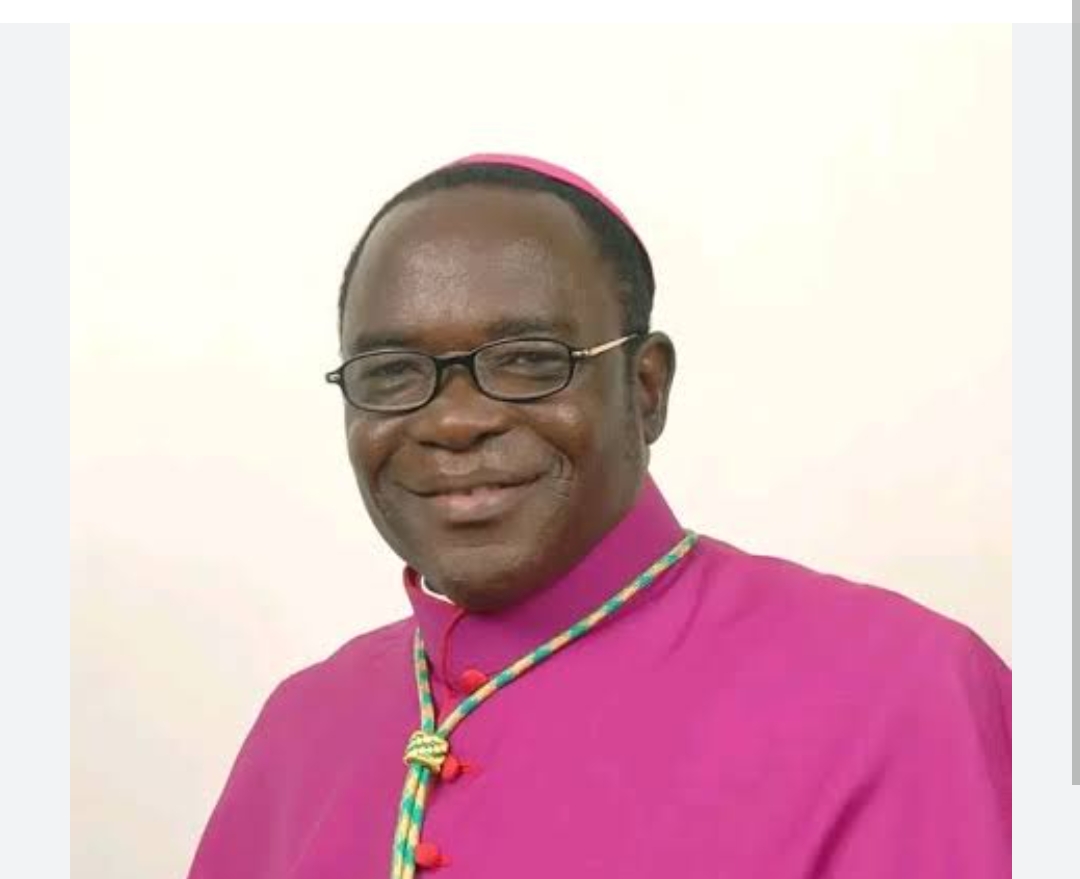
Abdul Mahmud, the president of the Public Interest Lawyers League (PILL), has railed against Mathew Hassan Kukah, Bishop of the Catholic Diocese of Sokoto, berating him as an evangelist of oppressors.
Mr Mahmud, in an article titled, “Definitions, Not Lives: Bishop Kukah’s Convenient Theology”, responded to Mr Kukah’s statement at the 46th Supreme Convention of the Knights of St. Mulumba (KSM) in Kaduna, in which he dismissed campaigns against alleged Christian genocide in Nigeria, adding that intent of terrorists’ killings must first be established to determine whether it is genocide or not.
“Mr Kukah reminds us that genocide is defined by intent, not by pools of blood and burnt out churches. The bishop speaks as if death can be measured only by some theological precision. He speaks as if suffering requires validation from the Vatican. He speaks as if the cries of widows, orphans, and Christian communities terrorised across northern Nigeria are hearsay unless confirmed by his office,” Mr Mahmud.
Speaking further, Mr Mahmud said, “Bishop Kukah has carved a niche for himself in Nigerian public life. Once, he poked the eyes of oppressors with fearless sermons and daring speeches. He once seemed a gadfly to power. He once understood the language of moral outrage. Today, he is the evangelist of the oppressors.”
He added that Mr Kukah “interprets atrocities for two conveniences: those in charge of the nation-state and the convenience of his new theology. He reduces horrors to mere numbers, questioning whether they can even be called horrors without an explicit intent behind them. He argues, with calculated sophistry, that genocide exists only when intent can be proven.”
Mr Mahmud also referenced Mr Kukah’s antecedents as a fiery preacher who spoke truth to successive governments. However, he said the cleric now takes sides with oppressive and repressive governments.
Speaking further, Mr Mahmud said, “Bishop Kukah has carved a niche for himself in Nigerian public life. Once, he poked the eyes of oppressors with fearless sermons and daring speeches. He once seemed a gadfly to power. He once understood the language of moral outrage. Today, he is the evangelist of the oppressors.”
He added that Mr Kukah “interprets atrocities for two conveniences: those in charge of the nation-state and the convenience of his new theology. He reduces horrors to mere numbers, questioning whether they can even be called horrors without an explicit intent behind them. He argues, with calculated sophistry, that genocide exists only when intent can be proven.”